Multi-tenant e-commerce
A multi-tenant e-commerce project built to show how storefronts, admin flows, reviews, and checkout can live in one codebase.
Note: the platform is currently under maintenance. Sorry for the inconvenience.
Project overview
This project presents a multi-tenant e-commerce platform in a leaner form, keeping the parts that matter most: tenant separation, product management, checkout, and merchant operations.
Even in this streamlined version, the core idea stays strong: multiple merchants operating within the same technical foundation, with distinct storefronts and shared infrastructure.
That makes it a strong portfolio piece. It is not just a static landing page or a checkout demo. It touches the parts that matter in real commerce products: tenants, catalogs, authentication, payments, reviews, and admin tooling.
Why this project works
This project demonstrates a classic commerce architecture, but with enough moving parts to show real engineering range.
- Multi-tenant storefronts
- Stripe-based payment and platform fee flows
- Payload CMS for structured content and product management
- Role-based access control for merchants and admins
- A user area for purchases and reviews
- Search, filtering, and image upload support
If the goal is to show ability rather than novelty, this kind of project works well. It is familiar enough to understand quickly, but broad enough to signal that the developer can handle a real product surface.
Architecture highlights
The stack is straightforward and credible: Next.js 15, Payload CMS, Stripe, Tailwind CSS, and shadcn/ui. That combination gives the project a modern frontend, a manageable content layer, and a payment system that maps cleanly to real transactions.
The multi-tenant layer is the most important part. Stores are isolated by tenant, with routing that can support subdomains or tenant-based URLs. That means one codebase can serve multiple merchants without collapsing into a single generic storefront.
Commerce flow
The project covers the core customer journey from browsing to checkout.
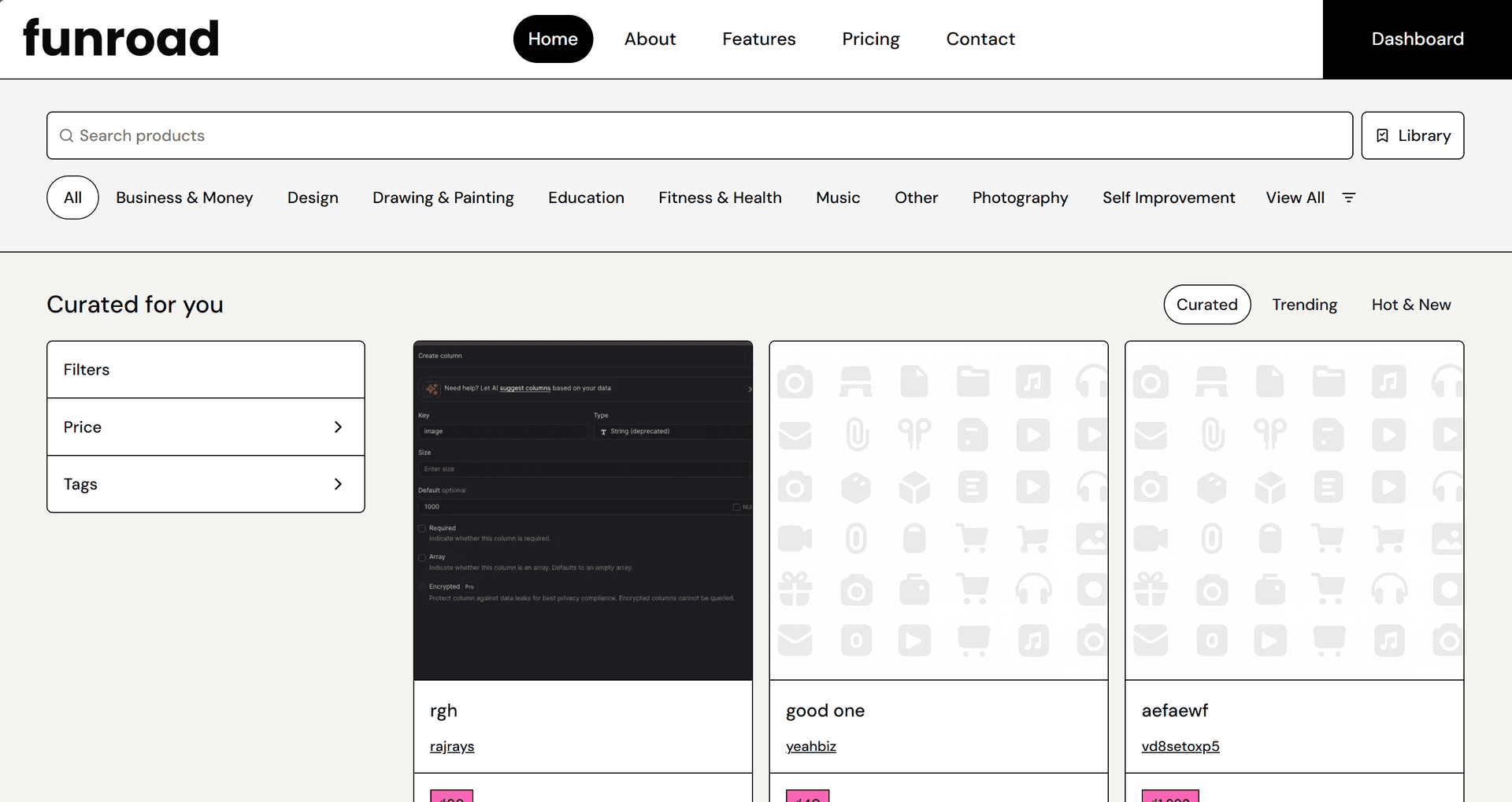
Products are presented with cards, images, price, and tenant context. Users can move through a catalog, open product detail views, leave reviews, and continue into checkout. That is the right shape for a practical e-commerce build because it shows both frontend UX and backend state handling.
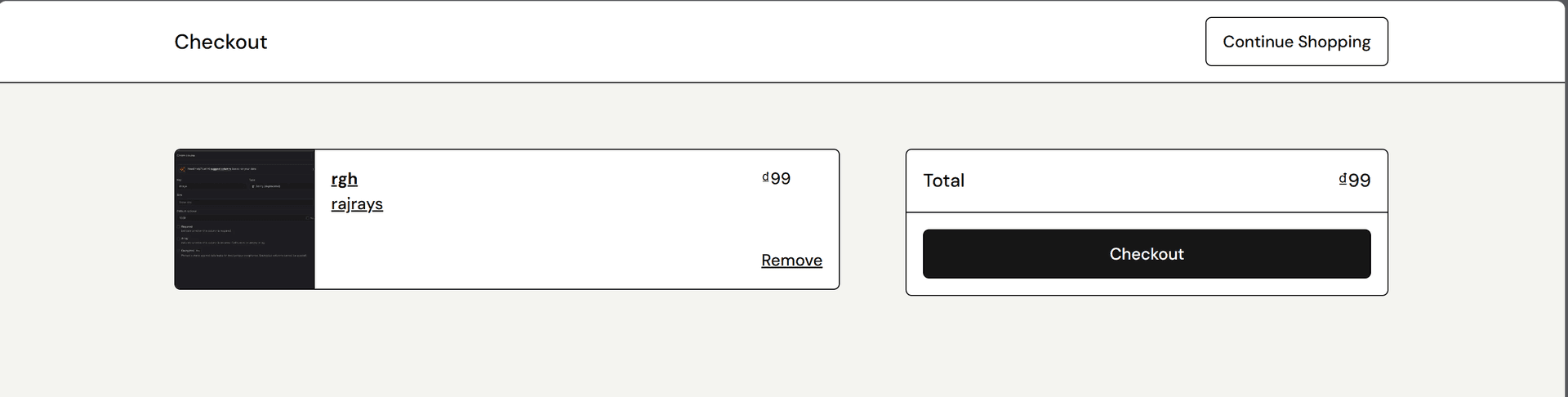
The checkout side is especially useful from a portfolio perspective. It shows that the app is not only about visuals, but also about state, validation, payment integration, and server logic.
Payments and checkout
This is where the transactional part of the project becomes clear: order confirmation, payment flow, and the final step toward completing a purchase.
Merchant and admin value
The project also exposes the seller side of the system. Tenants can be created, products can be managed, and access is controlled through roles. That is important because a multi-tenant product is only useful if the merchant experience is organized and safe.
For a reviewer, that means the project demonstrates more than UI work. It shows that the author understands platform design, permissions, and the difference between shopper workflows and operator workflows.
What the basic version says about the developer
Presenting the work in a leaner form of a more complex client project is a useful positioning choice. It shows that you can take a larger system, simplify the presentation, and still keep the important technical substance.
That still proves that you can:
- Read and reproduce a non-trivial architecture
- Keep flows coherent across frontend and backend
- Work with commerce concepts like products, tenants, and checkout
- Handle structured content and role-based access
- Deliver a working system rather than a visual mockup
That is a useful signal in a portfolio. It shows execution, architectural understanding, and the ability to simplify a project without losing what makes it meaningful.
Notable implementation cues
The project includes patterns that are valuable to mention:
- tenant-aware URLs and storefront routing
- Stripe account verification before product creation
- product reviews with rating and validation
- reusable UI primitives for forms, cards, alerts, and sheets
- a buildable codebase with clear developer scripts
Those details make the project feel closer to a real platform than a throwaway clone.
Conclusion
Multi-tenant e-commerce is a strong example of a full-stack project presented in a concise form that still reflects a more complex client implementation. Even in that simplified form, it communicates useful abilities: understanding architecture, implementing commerce flows, and organizing a complex web app cleanly.
For a portfolio or blog article, that is enough. The value is not in pretending the project is brand new. The value is in showing that you can take a demanding codebase and turn it into something coherent, maintainable, and ready for a real product context.
Reference project: next15-multitenant-ecommerce - Project under maintenance